
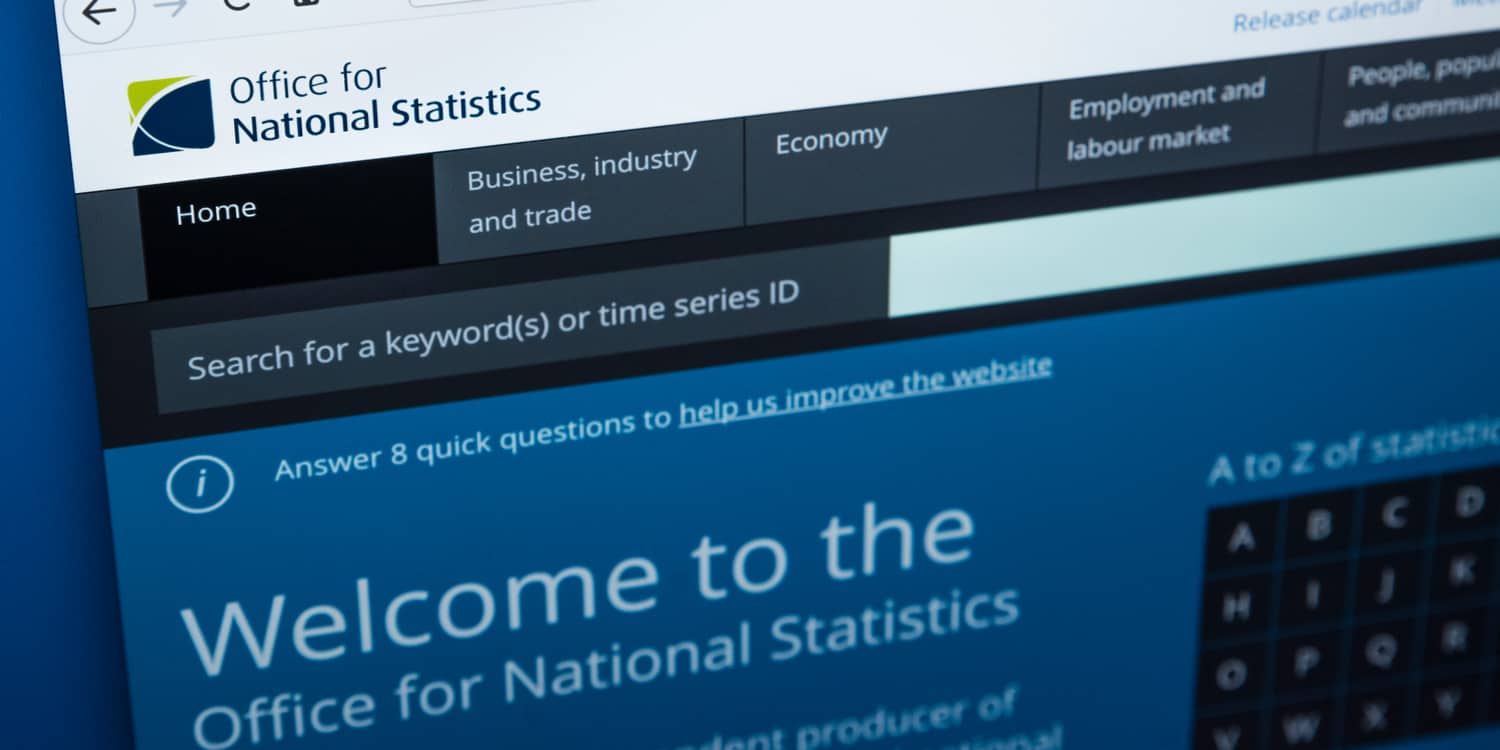

If you’ve received a letter asking you to complete an ONS business survey, it can be unsettling. For many small business owners, it arrives without warning and immediately raises a few practical questions: Is this genuine? Why have they contacted me? Do I actually have to do this? And what happens if I don’t?
This guide explains what the Office for National Statistics (ONS) does, why it sends surveys to businesses, and what ‘mandatory’ means in real terms. It also walks through what completing a survey usually involves, what information you’ll need, and where to turn if something doesn’t make sense.
Key takeaways
- Many ONS business surveys are mandatory once your business has been selected for participation.
- Failing to respond to a survey can result in reminders and, in some cases, enforcement action.
- Most surveys are manageable if you approach them methodically and ask for help when needed.
What is the Office for National Statistics (ONS)?
The Office for National Statistics is the UK’s main producer of official statistics. It collects and publishes data on the economy, businesses, and the population. The government, the Treasury, the media, and financial institutions widely use its figures.
- Laws that UK business owners should know
- Service address and registered office address – what’s the difference?
- How long should I keep my company records?
Business surveys are one of the primary methods for gathering data. The information businesses provide is combined with other responses to build national and sector-level statistics, helping to track national trends such as growth, employment, and industry performance over time.
Why does the ONS send surveys to businesses?
Most business owners already rely on statistics. Your market research notes whether demand in your sector seems to be rising or falling. You pay attention to changes in costs, wages, or customer behaviour. Even a quick glance at economic headlines can influence decisions about pricing, hiring, or whether to hold back for a few months.
Official statistics give those impressions some shape. They provide a shared picture of what’s happening beyond your own business, drawn from real activity rather than anecdotes. That’s useful whether you’re trying to sense-check a decision or simply understand the conditions you’re operating in.
The same principle applies on a much larger scale. Governments use economic statistics to make fiscal decisions, assess the health of industries, and plan public spending. Central banks rely on them when setting interest rates. Lenders, investors, and policymakers all depend on having a consistent view of the economy, especially when conditions are changing quickly.
For statistics to be useful at that level, they have to be reliable. And reliability depends on volume and coverage.
Is my small business really relevant to national statistics?
It’s a fair question, and a common one. If you run a small company, it’s easy to assume that your numbers won’t make any real difference to a national dataset.
In practice, that’s exactly why smaller businesses are included. The UK economy isn’t made up of a handful of large organisations. It’s built from hundreds of thousands of small and medium-sized enterprises (SMEs) operating in different sectors and regions. Leaving those out would distort the picture.
Trustworthy statistics depend on large, representative samples. If data only came from businesses that volunteered, or from a narrow group of larger companies, the results would quickly become skewed. Patterns that matter – particularly in fast-changing or fragmented sectors – would be missed.
ONS business surveys are designed to avoid that problem. By drawing information from businesses of different sizes and types, the data reflects what’s actually happening across the economy, not just at the top end.
This is why the ONS doesn’t only contact large organisations. SMEs are included, so the figures are grounded in real, day-to-day activity.


Why has my business been selected?
Selection is usually based on statistical sampling. Your business might fit the criteria for a particular survey, or the ONS may need responses from businesses in your industry or size band. Some businesses receive more than one survey over time, especially if they operate in sectors the ONS monitors regularly.
Which types of ONS business surveys might I receive?
The ONS runs a wide range of business surveys, each designed to measure something slightly different. Some focus on sales and turnover. Others look at employment, pay, production, or how businesses are structured.
Here’s an overview of some of the kinds of surveys you might encounter – but bear in mind that the full list is rather lengthy.
| Survey type | What it usually measures | How it is commonly completed |
| Monthly business surveys | Turnover, output, short-term trends | Often online |
| Quarterly surveys | Broader performance indicators | Online or paper |
| Register and classification surveys | Keeping business details up to date | Often online |
| Sector-specific surveys | Industry-specific activity | Usually online |
The forms can look daunting at first, mainly because they ask for figures in a particular format. In practice, most of the information comes from records you already keep, such as your accounts, invoices, payroll, or bank statements.
What are Monthly Business Surveys?
Monthly Business Surveys (often referred to as MBS) are among the most common surveys businesses receive. They’re used to track short-term movements in the economy.
Depending on the survey, you may be asked about turnover for a set period, sometimes broken down by type of income or activity. The data feeds into wider measures, including industry indices and elements of Gross Domestic Product (GDP).
If you’re wondering whether these surveys will keep coming, it depends on the survey and your business category. Many businesses remain in a survey sample for a defined period before rotating out.
Are ONS surveys mandatory for UK businesses?
For many surveys, yes. Once your business has been selected for a survey run under the ONS’s legal powers, responding is treated as a legal requirement.


This often catches smaller businesses by surprise. Many people are used to surveys being optional or easy to ignore. ONS surveys are different. They are official data-collection exercises backed by legislation, and the obligation applies regardless of the size of your business or how busy things are. That said, some surveys are still voluntary: the ONS will let you know either way.
Which law makes an ONS survey mandatory?
Most ONS business surveys in Great Britain are conducted under powers in the Statistics of Trade Act 1947. Northern Ireland has similar requirements under the Statistics of Trade and Employment (Northern Ireland) Order 1988.
In practical terms, the position is the same across the UK: if your business is selected for a mandatory survey, you’re expected to provide the requested information.
Can I refuse to complete a survey?
If the survey is mandatory, you can’t simply refuse it in the way you might ignore a voluntary questionnaire. Once your business has been selected for a mandatory ONS survey, responding is a legal requirement.
That doesn’t mean you’re expected to struggle in silence or get everything perfectly right. The ONS is aware that businesses deal with practical constraints. If you can’t access the online system, don’t have a specific figure, or need more time, the sensible option is to contact the survey team and explain the situation.
What happens if I don’t respond to an ONS survey?
In most cases, non-response leads to reminders and follow-up letters. If the survey is still ignored, the matter can be escalated.
Ultimately, the ONS can take enforcement action, which may involve prosecution and a fine. The figure commonly referenced in ONS guidance for non-compliance is up to £2,500, although the outcome depends on the circumstances and the court.
It’s also worth noting that deliberately or recklessly providing false information is treated much more seriously and can even lead to imprisonment. If you’re unsure, it’s better to explain your position and provide the best information you can support than to guess.
How should you complete an ONS survey?
Most business owners don’t object to the survey itself. What tends to cause stress is uncertainty about the process – but breaking it into steps usually helps.
1. Check it’s genuine
ONS communications include reference details and survey information. If anything looks odd, avoid using contact details from the letter until you’ve verified them via an official source.
If you use a registered office service, check whether the letter has been sent there and whether you have mail forwarding or scanning in place. Missing the post is a common reason businesses fall behind, and business address solutions – such as Rapid Formations’ address services – can make sure ONS letters don’t fall through the cracks.
2. Note the deadline
Put the deadline in your calendar straight away. If you leave it to ‘when things calm down’, it often sits there until the deadline is imminent.
Many surveys can be completed in under an hour once you have the right information to hand, although the time varies by survey and business complexity. If it’s your first time completing one, give yourself time.
3. Confirm how it needs to be submitted
Some surveys are completed online through the ONS secure collection system. Others still arrive as paper questionnaires, and you may be asked to return them by post. In some cases, there are editable versions available if you prefer to type rather than handwrite.
If you have trouble accessing the online system or if the paper form isn’t usable, contact the survey team. These issues are common, and the team can usually help.
4. Gather the information first
You’ll usually be drawing and cross-referencing information from:
- Bookkeeping or accounting software
- Bank statements to double-check timing and receipts
- Invoicing records
- Payroll records
- VAT returns, where relevant
If a figure doesn’t match your records exactly, you can often provide a reasonable estimate and explain how you arrived at it.
5. Keep a simple record
Save a copy of the submission confirmation or keep a note of the key figures you provided. If you receive a reminder after you’ve responded, you’ll be able to confirm the date and reference quickly. Reminder letters can get lost in the post, especially close to deadlines.
6. Ask for help early
If a question is unclear or if a survey doesn’t reflect how your business operates, don’t wrestle with it for days. Contact the survey team and explain what you can provide. This is often faster than trying to interpret the form on your own.
A quick checklist for ONS surveys
If you want a simple way to handle an ONS survey without letting it take over your week, follow these steps:
- Read the letter and confirm the deadline
- Confirm the survey method (online or paper)
- Set a calendar block to complete it
- Gather records before you begin
- Submit, then keep proof of submission
That’s usually enough to stay on the right side of the requirement without overthinking it.
Keeping compliance predictable
ONS surveys sit in an awkward space between routine admin and legal obligation. Once you treat them like any other official request, they become far less disruptive.
If your main concern is missing important post, it may be worth reviewing how your company receives official correspondence. Many directors use a registered office address service so statutory communication is handled consistently, even when they’re travelling or working remotely.
If you want to simplify your admin, Rapid Formations offers registered office services that help ensure you never miss an important letter from the ONS – or from anyone else.





Join The Discussion
Comments (2)
You didn’t give me the full access code
Hi,
Can you please confirm what access code you mean?
To confirm, we are Rapid Formations – a company formation agent.
Regards,
The Rapid Formations Team